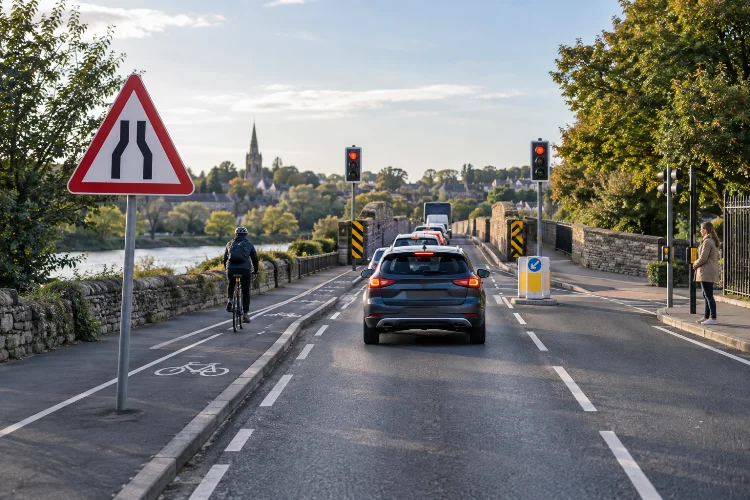
You are driving along an unfamiliar road when you suddenly see a sign with a symbol you do not recognize. A few seconds later, the road narrows, traffic slows, and you realize the sign was warning you about exactly what was coming.
Road signs and signals are easy to ignore when everything feels familiar. Yet they quietly organize almost every journey we make.
Understanding road signs and signals for safer travel means learning how roads communicate with drivers, cyclists, and pedestrians.
Signs tell us what we must do, warn us about potential hazards, guide us toward destinations, and help organize movement at intersections.
Traffic signals and pavement markings add another layer of information. Together, these devices create a system that makes road behavior more predictable.
The exact colors, symbols, shapes, and legal meanings can vary between countries, so local traffic regulations always matter.
International agreements and national standards nevertheless share a common goal: making traffic information clear enough for people to recognize and respond to it quickly.
Road Signs Create a Common Language
Road users often have only a few seconds to understand what is happening ahead.
That is why traffic signs use repeated shapes, colors, symbols, and layouts. Instead of requiring people to read a paragraph while moving, signs are designed to communicate important information quickly.
The U.S. Manual on Uniform Traffic Control Devices, for example, states that uniformity in the meaning of traffic control devices is vital to their effectiveness.
It covers signs, signals, markings, and other devices used to communicate regulatory, warning, or guidance information.
The same general idea appears internationally. The Vienna Convention on Road Signs and Signals was developed to promote greater consistency in traffic signs, signals, and road markings among participating countries.
Consistency reduces guesswork.
When a familiar symbol appears on an unfamiliar road, a traveler may still understand its basic purpose. That shared visual language makes travel more predictable and helps people make decisions before they reach a dangerous point.
Regulatory Signs Tell You What You Must or Must Not Do
Some signs provide information. Regulatory signs provide rules.
These signs may indicate speed limits, prohibited turns, one-way streets, parking restrictions, stop requirements, or areas where certain types of vehicles are not allowed.
The Federal Highway Administration classifies regulatory signs as one of the major categories of road signs and explains that they communicate laws and regulations governing road use. Examples include STOP, YIELD, ONE WAY, and speed-limit signs.
Ignoring a regulatory sign is different from simply missing useful travel information. The instruction may exist because traffic approaching from another direction depends on you following it.
Imagine entering a one-way street from the wrong direction.
Even if you are driving slowly, other drivers may not expect a vehicle to appear from that direction. A simple mistake suddenly creates a serious conflict.
The lesson is straightforward: regulatory signs are not decoration. They form part of the rules that allow different road users to move around each other safely.
Warning Signs Give You Time to Prepare
A warning sign usually tells you that something ahead deserves extra attention.
The road may curve sharply, narrow, become slippery, approach a railway crossing, pass through a school area, or enter a location where pedestrians or cyclists frequently cross.
These signs are valuable because drivers need time to react.
Seeing a hazard only when you reach it may leave very little room for braking or changing position. Seeing a warning sign earlier allows you to reduce speed, increase your following distance, and scan the road more carefully.
FHWA standards distinguish warning signs from regulatory and guide signs, while international road-sign systems also include danger-warning signs covering conditions such as road works, narrow roads, slippery surfaces, traffic signals, and other hazards.
The correct response is not always to stop.
Often, the purpose is simply to make you more alert and ready for changing conditions. Good drivers do not wait until the hazard becomes obvious before adjusting their behavior.
Guide Signs Help People Navigate Without Sudden Decisions
Missing an exit can be annoying. Making a sudden lane change because you nearly missed one can be dangerous.
That is where guide signs become important.
Guide signs help travelers identify routes, destinations, exits, services, street names, and other navigation information. FHWA materials list guide signs as one of the main functional classes of traffic signs.
Their safety role is sometimes overlooked because they do not usually warn about immediate danger.
But good navigation information reduces last-second decisions.
When a driver knows an exit is coming, they can change lanes gradually rather than crossing several lanes at once. A cyclist who sees a route marker can position themselves appropriately before reaching an intersection.
Clear guidance also reduces confussion in unfamiliar places.
Modern navigation apps are useful, but they should complement rather than replace road signs. Temporary closures, lane restrictions, or local traffic controls may appear on the road before they are reflected accurately in a digital map.
Traffic Lights Organize Competing Movements
Intersections can become complicated very quickly.
Cars may be traveling straight, turning, or making permitted U-turns. Cyclists may be moving through separate facilities, while pedestrians are crossing nearby.
Traffic signals organize these competing movements by assigning different road users a time to proceed or wait.
In the U.S. MUTCD, traffic-signal standards cover vehicle indications, bicycle signals, pedestrian signals, flashing beacons, lane-control signals, and several other traffic-control systems.
A steady green indication generally permits movement while still requiring vehicles to yield where applicable to pedestrians or other traffic already lawfully within the intersection.
That last point matters.
A green light does not mean “nothing can be in your way.” Drivers still need to check crosswalks, turning conflicts, cyclists, and vehicles already inside the junction.
Similarly, yellow or amber signals should not be treated as an invitation to race through an intersection.
Traffic lights work only when road users understand both the signal and the surrounding situation.
Pedestrian and Bicycle Signals Protect More Vulnerable Road Users
Not every traffic signal is intended for drivers.
Busy intersections may include special pedestrian signals, bicycle signals, audible cues, countdown displays, or other devices designed for people moving differently through the road system.
In U.S. standards, pedestrian signal heads use a walking-person symbol to indicate when pedestrians may begin crossing and an upraised-hand symbol to indicate when they should not start.
Accessible pedestrian signals can also provide non-visual information such as audible messages or vibrating surfaces for people with vision disabilities.
NHTSA also advises pedestrians to obey traffic signs and signals and to check the road themselves rather than simply following other people into a crossing. In 2024, 7,080 pedestrians were killed in U.S. traffic crashes, illustrating why pedestrian safety remains a serious concern.
Cyclists should also watch for bicycle-specific signals where they exist.
A driver may see a green light while a separate bicycle signal shows something different. Assuming every road user has received the same instruction can create a dangerous misunderstaning.
Pavement Markings Are Road Signs Under Your Wheels
Road communication does not stop at signs placed beside the street.
Lines, arrows, crosswalks, stop lines, bicycle-lane markings, and other pavement markings provide important information directly on the road surface.
They can separate opposing traffic, organize lanes, identify places to stop, guide turning movements, and show where particular road users are expected to travel.
The MUTCD treats pavement markings as traffic control devices alongside signs and signals, and FHWA has standards for maintaining their visibility.
This becomes especially important at night or during bad weather.
A faded lane line that seems unimportant in daylight may become difficult to see in rain or darkness. Maintaining good visibilty therefore supports both navigation and safety.
Road users also need to pay attention when permanent markings and temporary traffic controls seem different.
Road works may change the normal lane pattern, so temporary signs, cones, barriers, or markings may guide travelers through a different route.
Signs and Signals Still Require Human Judgment
One of the biggest mistakes road users can make is believing that following a signal automatically guarantees safety.
It does not.
A light may turn green while a pedestrian is still finishing a crossing. A sign may allow a particular speed, but heavy rain could make that speed unsafe. A cyclist may technically have priority but still need to watch for a driver who has not noticed them.
Traffic control devices provide instructions and guidance, but road users still need awareness.
This is particularly important because signs and signals cannot predict every human error.
A responsible driver scans beyond the nearest sign. A cyclist watches traffic even when using a designated lane. A pedestrian checks for approaching vehicles instead of assuming every driver has seen the crossing signal.
The safest approach combines rules with observation.
Understanding the instruction tells you what should happen. Paying attention tells you what is actually happening.
Learning Local Signs Matters When Traveling
Many traffic symbols are internationally recognizable, but road systems are not identical everywhere.
Colors, sign shapes, lane rules, turning permissions, pedestrian signals, and road markings can differ between countries and sometimes between jurisdictions.
The Vienna Convention has encouraged international standardization, but travelers should never assume that every familiar-looking sign has exactly the same legal meaning everywhere.
Before driving in another country, spend some time reviewing its official road rules.
Pay particular attention to speed signs, parking restrictions, priority signs, roundabouts, railway crossings, bicycle facilities, and unusual signals.
This small amount of preparation can prevent stressful decisions later.
It is especially useful when traveling somewhere that drives on the opposite side of the road from what you are used to. Even a familiar intersection can feel surprisingly strage when traffic approaches from unfamiliar directions.
Road signs and signals are one of the simplest but most important parts of a safe transportation system. Regulatory signs establish rules, warning signs highlight hazards, guide signs help travelers navigate, and traffic signals organize movements where different road users meet.
Pavement markings, pedestrian signals, bicycle controls, and temporary traffic devices add even more information. Together, they make roads more predictable for drivers, cyclists, and people walking.
However, recognizing a sign is only the beginning. Safer travel also requires observation, good judgment, and knowledge of local traffic laws.
The next time you travel, notice how much information the road is constantly giving you. Review unfamiliar signs before driving somewhere new, follow official signals, and use every traffic-control device as a tool for making safer decisions.