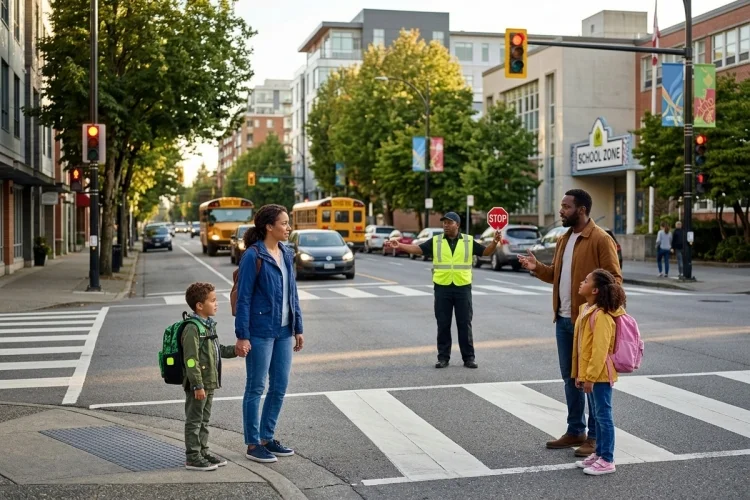
A normal journey to school can involve more risks than we usually notice. A child may cross a busy street, ride a bicycle beside traffic, travel on a motorcycle, wait near a school bus, or sit in a family car surrounded by distracted and speeding drivers.
That is why road safety education for students and families matters. It teaches practical habits that can help people recognise hazards, make safer decisions, and understand how their behaviour affects everyone sharing the road.
The issue is especially important for young people.
The World Health Organization reports that road traffic injuries are the leading cause of death globally for children and young adults aged 5–29, while more than half of road traffic deaths involve vulnerable road users such as pedestrians, cyclists, and motorcyclists.
Road safety education cannot prevent every crash by itself. Safer roads, vehicles, laws, enforcement, and responsible driving also matter. But education gives students and families something they can use every day: better awareness and safer habits.
1. Road Safety Education Builds Everyday Awareness
Good road safety begins before someone steps onto the road.
Students need to learn how to recognise traffic signals, pedestrian crossings, driveways, intersections, parked vehicles, blind spots, and other common hazards. More importantly, they need to understand that traffic conditions can change in seconds.
Children are particularly vulnerable because their physical and cognitive development differs from that of adults. The WHO notes that younger children may have difficulty seeing surrounding traffic because of their smaller size, while drivers may also find it harder to see them.
That makes repeated practice important.
Instead of simply telling a child, “Be careful when crossing,” parents and teachers can explain what careful behaviour actually looks like. Stop before entering the road, look for moving traffic, listen for vehicles, use safer crossing points, and continue watching while crossing.
The goal is to turn safety instructions into automatic habits.
2. Students Need Practical Pedestrian Skills
Walking is one of the most common ways students interact directly with traffic.
Pedestrian safety education should therefore go beyond memorising signs. Children need realistic practice in deciding where and when to cross.
The U.S. National Highway Traffic Safety Administration’s Child Pedestrian Safety Curriculum teaches elementary-aged students through lessons covering walking near traffic, crossing streets, intersections, parking lots, and school bus safety.
NHTSA also advises pedestrians to use sidewalks where available, obey traffic signs and signals, and cross at intersections or crosswalks rather than unexpectedly entering traffic mid-block.
Teach Students to Think Before Crossing
Imagine a student sees a pedestrian crossing and immediately assumes every driver will stop.
Road safety education teaches a better approach: the crossing creates a safer place to cross, but the student should still confirm that approaching vehicles are actually slowing or stopping.
This kind of situational awareness is more useful than simply memorising the rule.
Families can reinforce the lesson during everyday walks. Instead of giving constant instructions, parents can occasionally ask children, “Where would be the safest place to cross here?” This encourages students to actively evaluate the environment.
3. Helmets and Safe Cycling Habits Reduce Risk
For students who cycle to school or around their neighbourhoods, road education should include bicycle control, visibility, traffic rules, and helmet use.
The CDC recommends wearing a helmet when riding bicycles and other two-wheeled transport, including motorcycles, motorbikes, e-bikes, and e-scooters.
A helmet, however, does not make a rider invincible.
Students should also understand predictable riding. Sudden direction changes, riding against traffic rules, using a phone while moving, or entering an intersection without checking can create danger even when protective equipment is worn.
Basic bicycle education can teach young riders to check brakes and tyres, use appropriate lights or reflective equipment, communicate turns where required, and remain alert around driveways and parked vehicles.
Parents also have an important role here. A child is more likely to treat helmet use as normal when adults consistently model the same behaviour.
Safety rules become stronger when the entire family follows them.
4. Seat Belts and Child Restraints Should Be Automatic
Road safety education also applies when students are passengers.
One of the simplest habits is buckling up on every trip. The CDC reports that seat belts reduce serious crash-related injuries and deaths among adults and older children by about half.
Younger children need restraints appropriate for their age and size. CDC guidance recommends correctly securing children in car seats, booster seats, or seat belts according to their developmental needs and physical size.
Families should avoid treating short trips as exceptions.
A drive to school, a nearby shop, or a friend’s house can feel routine, but traffic risks do not disappear because the journey lasts only a few minutes.
Parents can make buckling up a simple household rule: the vehicle does not move until everyone is properly secured.
That approach removes negotiation from the situation. Seat belts become an ordinary part of getting into a vehicle, just like closing the door.
5. Teenagers Need Education Before They Become Drivers
Road safety becomes even more important as students approach driving age.
Teen drivers are still developing experience in judging speed, distance, traffic gaps, and unexpected hazards. They can also face risks associated with distraction, passengers, speeding, and inconsistent seat belt use.
CDC guidance identifies several factors that increase crash risk among teen drivers, including inexperience and risky behaviours such as failing to wear seat belts consistently.
Road safety education should therefore begin before a teenager receives a licence.
Students can learn about distraction, safe following distance, speed management, impaired driving, fatigue, passenger influence, and the responsibility involved in controlling a vehicle.
Parents remain important even after formal driver education begins.
A family rule such as “phones stay out of your hands while driving” becomes more meaningful when adults follow it too. Telling teenagers not to text while driving while regularly checking messages at traffic lights sends a conflicting message.
Young drivers learn from what adults do as much as from what adults say.
6. School Zones Require Cooperation From Everyone
School entrances and exits can become complicated environments.
Cars arrive and leave, buses stop, children cross roads, cyclists move through traffic, and parents may be in a hurry. That combination creates a strong reason for slower speeds and greater attention.
NHTSA advises motorists to slow down and stay alert around school zones, neighbourhoods, and bus stops, particularly when children are walking or gathering nearby.
Road safety education can help students understand designated pickup areas, safe bus behaviour, crossings, and why running suddenly between parked vehicles is dangerous.
However, students cannot carry the entire responsibility.
Drivers must follow school-zone rules. Parents need to avoid dangerous parking or rushed drop-offs. Schools and local authorities can improve crossings, signs, sidewalks, traffic management, and other infrastructure.
The U.S. Department of Transportation’s Safe System approach similarly treats road safety as a shared responsibility rather than expecting individuals to prevent every mistake on their own.
Education works best when the road environment supports the behaviour being taught.
7. Families Turn Safety Lessons Into Daily Habits
A student may receive excellent road safety lessons at school, but family behaviour determines how often those lessons are reinforced.
Imagine a teacher tells children to cross at safe locations, but a parent regularly pulls them across a busy road between parked cars because it is quicker. The child receives two completely different messages.
Consistency matters.
Families can reinforce road safety through ordinary routines rather than formal lessons. Wear seat belts every time. Use helmets correctly. Put phones away while driving. Slow down near pedestrians. Stop at crossings and follow traffic signals.
Parents can also turn journeys into small learning opportunities.
Ask younger children to identify hazards. Let older students help plan a safe walking or cycling route to school. Discuss why a particular intersection is difficult to cross or why visibility becomes worse at night or during heavy rain.
These conversations build judgment, not just rule memorisation.
8. Education Works Best With Safer Roads and Communities
Road safety education is important, but teaching students to “be careful” cannot compensate for every dangerous road design.
A child may understand safe crossing perfectly and still struggle if there is no sidewalk, traffic moves extremely fast, or the nearest safe crossing is far away.
This is why modern road safety increasingly combines education with safer infrastructure and system-level prevention.
The U.S. Department of Transportation notes that education encouraging safer walking and cycling can be more effective when combined with infrastructure improvements and programmes such as Safe Routes to School.
The WHO also reports that around 1.16 million people die from road traffic crashes globally each year, highlighting why road safety requires broad action rather than relying on individual behaviour alone.
Schools, families, police, transport agencies, local governments, and communities all have different roles.
Education gives people safer habits. Good road design makes those habits easier to use.
Understanding how road safety education protects students and families comes down to building safer decisions into everyday life.
Students can learn how to cross roads carefully, cycle responsibly, wear helmets, use seat belts, recognise traffic hazards, and eventually become safer drivers.
Families make those lessons stronger by modelling the same behaviour. Schools can provide practical education, while communities and governments support safety through better crossings, sidewalks, speed management, and road design.
The most effective road safety lesson is not something children hear once and forget. It becomes a repeated habit.
Start with your family’s normal journey to school. Look for risky crossings, distractions, unsafe pickup habits, or missing protective equipment, and choose one practical improvement you can make today.