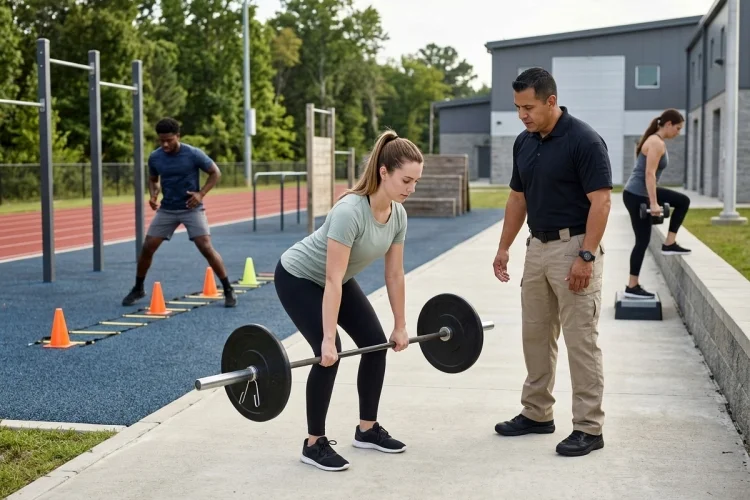
Preparing physically for a police career can be exciting, but it is easy to make one common mistake: trying to get fit too quickly.
Suddenly running every day, lifting weights far beyond your current ability, or copying an advanced academy workout may feel productive, but it can also increase fatigue and injury risk.
Learning how to build safe fitness habits for police preparation is about creating a body that can perform consistently, not simply surviving one difficult workout.
Police candidates may need a combination of cardiovascular endurance, muscular strength, agility, speed, coordination, and the ability to recover between demanding activities.
For example, the Los Angeles Police Department’s Physical Abilities Test assesses areas including strength, agility, and endurance through several different events.
The best preparation therefore combines different forms of exercise while increasing difficulty gradually.
A smart training routine should challenge you, but it should also leave enough room for recovery, sleep, proper technique, and steady improvement.
1. Start With Your Current Fitness Level
The safest training programme begins with where you are now-not where you want to be three months from now.
Someone who already runs regularly can usually handle a different starting workload from someone who has been mostly inactive. Trying to copy another person’s programme without considering your own fitness level can lead to unnecessary soreness, fatigue, or injury.
Public-health guidance supports gradual progression. The U.S. Department of Health and Human Services recommends that inactive adults begin with smaller amounts of activity and gradually work toward higher levels as their fitness improves.
The CDC similarly recommends starting slowly and increasing either workout duration or intensity over time.
For example, if you cannot comfortably jog for 20 minutes, there is little benefit in forcing yourself through a long-distance run immediately. Start with a mixture of walking and light jogging, then gradually increase the running portions.
Progress that feels almost boring at first is often more sustainable than an aggressive programme you cannot maintain.
2. Build Both Cardio and Strength
Police preparation should not revolve around only one type of exercise.
Running is useful because many police fitness assessments test cardiovascular endurance. However, police work can also involve climbing stairs, moving quickly, carrying equipment, controlling body position, lifting objects, or helping another person.
The CDC recommends that adults get at least 150 minutes of moderate-intensity aerobic activity each week, or 75 minutes of vigorous activity, plus muscle-strengthening exercise on at least two days.
These are general health guidelines rather than specific police-test standards, but they provide a useful foundation.
Police candidates should then adjust training toward the requirements of the agency they hope to join.
For example, the LAPD Physical Abilities Test currently includes one-minute sit-ups, a 300-meter sprint, one-minute push-ups, and a 1.5-mile run. Other agencies may use shuttle runs, obstacle courses, strength assessments, or different standards.
That is why your training should reflect your actual target test rather than a random fitness challenge found online.
3. Increase Training Gradually
One of the simplest safe fitness habits for police preparation is resisting the temptation to increase everything at once.
If you add more running distance, heavier weights, extra training days, and faster sprint sessions during the same week, your body receives several new stresses simultaneously.
Instead, progress one or two variables gradually.
A beginner might first focus on completing three consistent workouts each week. Once that routine feels manageable, they could slowly increase running duration or resistance during strength sessions.
The CDC advises gradually increasing activity as confidence and ability improve. It also recommends learning how to warm up and cool down as part of reducing injury concerns.
Technique Comes Before Numbers
The same rule applies to strength training.
Ten controlled push-ups with good body alignment are more useful than twenty rushed repetitions performed with poor technique simply to reach a bigger number.
Build movement quality first. Speed, resistance, and volume can come later.
This is especially important when preparing for an official fitness test, because practising poor movement patterns repeatedly can make them harder to correct.
4. Train for Realistic Police Fitness Demands
General fitness is valuable, but police preparation becomes more effective when training develops several different physical qualities.
Steady running can improve aerobic endurance, while shorter intervals can help prepare for bursts of higher-intensity activity. Strength exercises such as squats, lunges, push-ups, rows, and controlled core work can develop basic muscular capacity.
Movement training can also include safe changes of direction, short accelerations, balance exercises, and mobility work.
Police standards vary significantly by jurisdiction. In England and Wales, for example, the College of Policing uses job-related fitness standards designed around the physiological demands of police roles.
The lesson is simple: train for the job and the official assessment, not just for appearance.
A candidate who spends all their time bodybuilding but never works on cardiovascular endurance may struggle with running. Someone who only runs may lack the strength needed for other physical tasks.
Balanced preparation produces a more useful kind of fitness.
5. Treat Recovery as Part of Training
Rest days are not wasted days.
Training creates stress on the body. Recovery is when your body adapts to that stress, making sleep and easier training days important parts of long-term progress.
Adults aged 18 to 60 are generally recommended to get at least seven hours of sleep per night. The CDC also notes that sufficient sleep supports attention, memory, mood, and overall health.
That matters for police candidates because preparation often combines physical exercise with studying, work, and other responsibilities.
If your legs feel unusually heavy, your performance keeps dropping, or normal workouts suddenly feel much harder, constantly adding more exercise may not be the smartest response.
Sometimes the better decision is an easier session, additional sleep, or a recovery day.
Consistency over several months matters more than winning every workout.
6. Train Safely in Hot Weather
Outdoor police preparation introduces another challenge: heat.
People exercising on hot days have a greater risk of dehydration and heat-related illness. The CDC recommends scheduling exercise during cooler parts of the day when possible, beginning activity gradually, drinking water, and stopping activity if you feel faint or weak.
This is particularly relevant in hot and humid climates, where even a familiar running session can feel much harder.
Do not assume that finishing a workout at any cost proves toughness.
Heat illness is not a fitness achievement.
Adjust pace when conditions are difficult, use appropriate clothing, stay hydrated, and pay attention to warning signs. If you develop serious symptoms of heat-related illness, seek medical assistance rather than trying to “push through” them.
Learning to manage environmental conditions is part of training intelligently.
7. Make Consistency Your Main Goal
The best police fitness programme is not necessarily the hardest one.
It is the programme you can follow consistently enough to improve.
A realistic week might include two or three cardiovascular sessions, two strength sessions, some mobility work, and appropriate recovery. The exact structure should depend on your current ability, test requirements, schedule, and health.
Track simple indicators such as running time, distance, repetitions, workout consistency, and how difficult sessions feel. These records make progress easier to see without turning every workout into a maximum-effort test.
Official police agencies also encourage candidates to prepare before academy entry. The LAPD, for example, describes academy physical training as intense and advises candidates to begin conditioning before the academy rather than waiting until training starts.
Finally, listen to your body. Normal training discomfort is different from severe or persistent pain.
If you have an existing medical condition, disability, previous significant injury, or concerns about starting vigorous exercise, discussing appropriate activity with a healthcare professional is sensible.
CDC guidance specifically recommends professional advice for people whose health conditions may affect appropriate exercise.
Safe preparation is not about avoiding hard work. It is about making hard work sustainable.
Learning how to build safe fitness habits for police preparation means thinking beyond quick results.
Strong candidates need cardiovascular endurance, strength, movement skills, recovery, and the discipline to improve gradually rather than doing too much too soon.
Start from your current level, combine aerobic and strength work, practise correct technique, and increase difficulty progressively.
Just as importantly, protect your sleep, schedule recovery, stay aware of heat conditions, and train specifically for the standards used by your chosen police service.
If a police fitness test is part of your future goal, find its official requirements and begin preparing well in advance.
Build a routine you can repeat week after week. The goal is not simply to pass one test-it is to develop fitness habits that can support a demanding career.