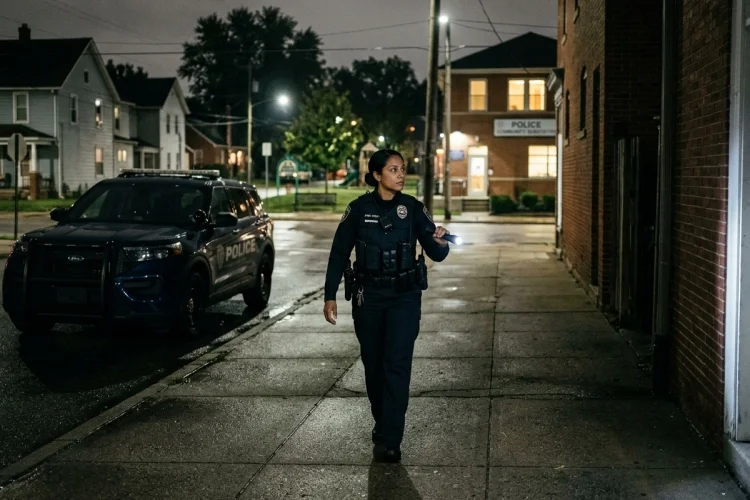
A police officer can be physically fit, highly trained, and knowledgeable about criminal law, but without integrity, those strengths can quickly lose their value.
Police work gives individuals significant authority over other people’s freedom, safety, privacy, and sometimes even their lives. That level of responsibility requires a strong ethical foundation.
This is why understanding why personal integrity is essential in every police career should begin during training, not after an officer receives a badge.
Integrity means doing what is lawful and ethically right even when nobody appears to be watching. It includes honesty in reports, fairness during encounters, responsibility for mistakes, and the courage to reject corruption or improper behavior.
The International Association of Chiefs of Police (IACP) places integrity at the center of professional policing. Its Policing Code of Ethics, updated in 2024, emphasizes ethical conduct as part of law enforcement’s commitment to the public.
For future officers, integrity is not an optional personality trait. It is part of the job.
1. Police Integrity Begins With Public Trust
Police officers depend on cooperation from the communities they serve. Victims report crimes, witnesses provide information, residents share concerns, and neighborhoods often help officers recognize problems before they become more serious.
That cooperation becomes harder when people do not trust the police.
The U.S. Department of Justice’s COPS Office describes community trust as fundamental to safe and effective policing. Positive relationships between officers and residents can improve safety while encouraging shared responsibility for addressing crime and disorder.
Personal integrity contributes directly to that trust.
Imagine an officer promises a shop owner that reported information will be handled according to department procedures.
If the officer is careless, dishonest, or deliberately ignores the complaint, the damage may extend beyond one interaction. That business owner may hesitate to contact police again.
By contrast, officers who consistently behave honestly and professionally gradually build credibility.
Trust is rarely created by one dramatic moment. More often, it grows through hundreds of ordinary interactions.
2. Honesty Is Critical in Police Reports and Investigations
Police officers produce records that can influence arrests, prosecutions, court decisions, and people’s reputations. Because of this, even seemingly minor dishonesty can have serious consequences.
Suppose an officer writes that a suspect was running away when the officer actually saw the person walking quickly. Changing that detail might seem small, but it creates an inaccurate official record.
Good police integrity requires officers to report what actually happened rather than what would make a case appear stronger.
This includes admitting uncertainty.
Writing, “I could not clearly see the object in his hand,” may feel less impressive than confidently identifying an object. But if that is what the officer genuinely observed, accuracy matters more than creating a stronger narrative.
An officer’s credibility can also become important in court, where police reports, observations, evidence handling, and testimony may face close examination.
Integrity therefore protects both the individual officer and the investigation itself.
3. Ethical Policing Means Using Authority Fairly
Police officers have powers ordinary citizens do not have. Depending on the jurisdiction, they may legally detain people, conduct certain searches, issue citations, make arrests, seize evidence, and use force under specific circumstances.
Integrity helps ensure those powers are not abused.
An ethical officer does not use authority to settle personal arguments, intimidate someone they dislike, give friends special treatment, or punish people for being disrespectful.
Fairness Matters Even During Difficult Encounters
Being fair does not mean officers must agree with everyone they encounter. It means decisions should be based on law, evidence, policy, and legitimate public safety concerns rather than personal bias or anger.
Procedural justice provides a useful framework. The COPS Office identifies four major principles: fairness in processes, transparency in actions, opportunities for people to have a voice, and impartiality in decision-making.
These principles connect closely with personal integrity.
An officer may still need to arrest someone or issue a citation. However, the person can be treated respectfully, given an opportunity to speak, and told what is happening when circumstances permit.
Authority and professionalism should work together.
4. Integrity Requires Accountability for Mistakes
Police officers are human, which means mistakes will happen.
Integrity does not mean pretending to be perfect. In many situations, the more important question is what an officer does after recognizing an error.
Imagine an officer writes the wrong vehicle registration number in an initial report. An officer with strong professional ethics should correct the mistake through the appropriate procedure rather than quietly changing facts or hoping nobody notices.
Accountability becomes even more important when the mistake is serious.
Modern policing increasingly emphasizes transparency and responsibility because law enforcement agencies exercise government authority.
The U.S. Department of Justice can investigate patterns or practices in state and local law enforcement agencies that systematically deprive people of constitutional or federal rights.
For police students, there is an important practical lesson: protecting your reputation does not mean hiding errors.
A reputation for integrity is built by responding honestly when something goes wrong.
5. Small Ethical Choices Can Lead to Bigger Consequences
Corruption does not always begin with a dramatic criminal act.
Sometimes ethical problems start with apparently minor decisions: accepting an inappropriate favor, ignoring misconduct by a friend, accessing confidential information without a legitimate reason, or changing a report to avoid criticism.
Once an officer becomes comfortable crossing small ethical boundaries, larger violations may become easier to justify.
This is why police ethics training often focuses on decision-making before a serious problem develops. Officers should learn to recognize conflicts of interest and situations where personal relationships, money, favors, or emotions could influence professional duties.
The IACP notes that professional ethics and integrity affect virtually every area of law enforcement, from recruitment and selection to promotion, training, assignments, and field activities.
A useful personal test is simple: would you be comfortable explaining the decision accurately to your supervisor, a court, your colleagues, and the community?
If the answer is no, that is a warning sign worth taking seriously.
6. Integrity Includes Speaking Up About Misconduct
One of the hardest ethical situations for a police officer may involve another officer.
Police teams rely heavily on trust and loyalty, especially during dangerous situations. But professional loyalty cannot mean protecting serious misconduct.
An officer may face situations where a colleague violates department policy, treats someone improperly, uses authority for personal benefit, or provides inaccurate information about an incident.
Remaining silent can allow the problem to continue.
The traditional IACP Law Enforcement Code of Ethics explicitly rejects corruption and bribery and stresses that officers should not condone such acts by other law enforcement personnel. Its modernized ethics framework continues to treat professional responsibility as central to policing.
Speaking up may be uncomfortable. However, ethical courage is part of integrity.
A professional officer should understand reporting procedures, supervisory channels, and agency policies for addressing misconduct.
Protecting the profession sometimes means challenging behavior that damages it.
7. Ethical Conduct Strengthens Police Legitimacy
People judge police agencies not only by crime statistics but also by how officers behave during everyday encounters.
A resident may never experience a burglary or violent crime, but they might interact with an officer during a traffic stop, neighborhood dispute, accident, or public event. That single encounter can shape how they view law enforcement.
Research and guidance from the National Institute of Justice connect police legitimacy with the everyday process of policing and the quality of interactions between officers and communities.
This makes ethical behavior operationally important, not merely morally desirable.
When residents believe officers act fairly and legitimately, they can be more willing to cooperate with law enforcement and respect legal authority.
COPS Office materials on procedural justice similarly note a relationship between perceived police legitimacy, cooperation, and willingness to obey the law.
Integrity therefore supports effective policing.
An officer who treats people consistently and honestly helps strengthen the legitimacy of the entire agency.
8. Integrity Matters On and Off Duty
A police officer’s responsibilities do not completely disappear at the end of a shift.
Off-duty behavior can sometimes affect professional credibility, public confidence, security, conflicts of interest, or an officer’s ability to perform official duties.
This does not mean officers lose their private lives. It means police professionals must understand that certain actions outside work can still create ethical or professional consequences.
For example, improperly sharing confidential case information with friends would be an obvious problem even if the conversation happened during personal time.
Social media creates another challenge. Posting confidential information, discriminatory comments, evidence from active investigations, or inappropriate statements about citizens could undermine public trust and potentially violate agency rules.
The U.S. Department of Justice maintains ethics guidance covering both on-duty and off-duty conduct for DOJ personnel, demonstrating how professional ethics can extend beyond normal working hours.
For future police officers, good judgment should become a habit rather than something activated only when wearing a uniform.
Understanding why personal integrity is essential in every police career comes down to one basic idea: police authority depends on trust.
Officers are expected to enforce laws, protect rights, handle sensitive information, document incidents accurately, and make difficult decisions under pressure.
Integrity gives those responsibilities a reliable foundation.
Honesty strengthens investigations. Accountability protects credibility. Fair treatment supports police legitimacy, while ethical courage helps prevent misconduct from becoming part of organizational culture.
For police students, the best time to develop these habits is before entering the field. Practice making decisions you can explain openly, write reports based strictly on facts, accept responsibility for errors, and never allow convenience or loyalty to replace professional ethics.
A badge gives an officer authority. Integrity is what makes that authority worthy of trust.